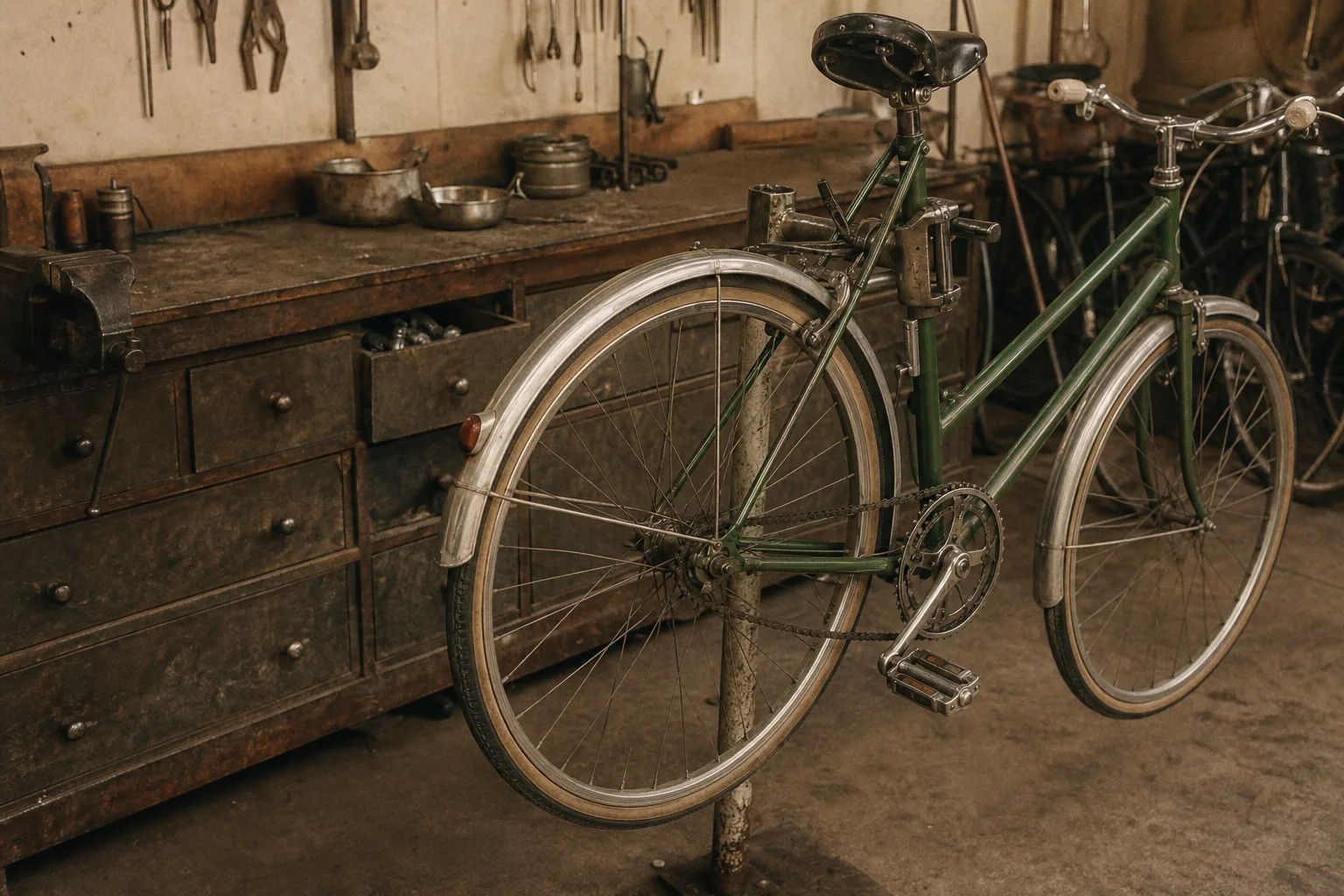
An account of working out which upright bicycles stay pleasant over short, frequent trips, based on riding a handful of them on the same errands and sending two back. Everything here is one rider's finding, not a recommendation.
A bicycle ridden twice a week on errands accumulates distance slowly and wear unevenly. The parts that go first are not the ones that get discussed in showrooms, and the bill that arrives at the two-year mark is mostly labor, not components. What follows is an account of the wear items that came up across several upright bikes ridden on the same short trips, in the order they tended to announce themselves, and the questions a careful reader can ask in the store before any of it becomes their problem.
1. The chain, which is cheap until it is not
Chains stretch, or rather the pins and rollers wear until the chain sits differently on the teeth. Replaced on time, a chain is one of the least expensive parts on the bike and the labor is a few minutes at the counter. Left too long, it drags the rear sprockets into the same condition, and then the job is a chain, a cassette or freewheel, and sometimes a chainring. Shops typically check with a wear gauge, a small steel tool with 0.5 and 0.75 percent marks, and any shop will do that check while you wait.
2. Brake pads, and the rim or rotor underneath them
Rim brake pads on a bike used for short trips in wet weather wear faster than the mileage suggests, because grit from the road gets embedded in the rubber and turns the pad into a file. The pads themselves are inexpensive; the rim they are grinding is not. Disc pads last longer and are quieter about it, though the rotor eventually thins as well. In practice, a shop charges pad replacement as a flat per-wheel labor rate plus parts, and bleeding hydraulic brakes is billed separately, usually at a higher rate.
3. Tires, tubes, and the value of not walking home
Tire life on an upright bike used for errands is governed less by distance than by pressure, debris, and how long the casing sits in sunlight. Wide tires at moderate pressure last well and puncture less, which is the practical argument for them alongside the ride quality. Puncture-resistant models cost more per tire and are noticeably heavier, and most riders who fit them stop thinking about flats. A shop charges a flat repair as a small labor item, so two or three flats a year quickly exceed the price difference of a better tire.
4. Internal hub versus derailleur, and what each one costs to keep
An internally geared rear hub is sealed, indifferent to road salt, and needs its shift cable adjusted rarely. Manufacturers generally specify an oil change or service at long intervals, and not every shop does that work in house, so it is worth asking before you buy. A derailleur system is the opposite arrangement: exposed, cheap to adjust, and something a shop will tune for a modest bench charge, but it wants that attention more often. For short trips in bad weather, the hub usually costs less attention over several thousand kilometers.
5. The parts that cannot be replaced at all
This is the check that separates a bike worth maintaining from one that becomes disposable. On lower-priced bikes, certain components are proprietary enough that no standard replacement exists: a one-piece crank, a shifter molded into the brake lever, a headset in a non-standard size, a rear wheel with a hub no supplier stocks. When one of those fails, the shop's honest answer is that the repair costs more than the bike. Before buying, ask whether the crank, bottom bracket, headset, and rear hub are standard parts, and note the answer.
6. What the labor line actually reflects
Shops price service by the job or by the hour, and the difference between a twenty-minute adjustment and a two-hour overhaul is mostly the number of parts that have to come off first. Fenders, chain guards, racks, and internal cable routing all add time, which is worth knowing on an upright commuter that has all four. The Consumer Product Safety Commission oversees bicycle safety requirements in the United States, and a shop's assembly and safety check reflects that same set of concerns. Asking for a written estimate before work begins is normal and expected.
The running cost of a short-trip bicycle is small and predictable once you know which items are consumable and which are structural. A rider who replaces chains early, keeps tires at pressure, and buys a frame built from standard parts spends very little per year, and spends it on schedule rather than in emergencies.